
THEATRE is a complex art; many elements and layers combine to create the whole. Each audience member at a play is going to see and feel something different. The friend who joined me for Paul Slabolepszy’s Bitter Winter (at The Baxter Golden Arrow Studio until June 14) had a brief note. Brutal, she said. And she’s not wrong.
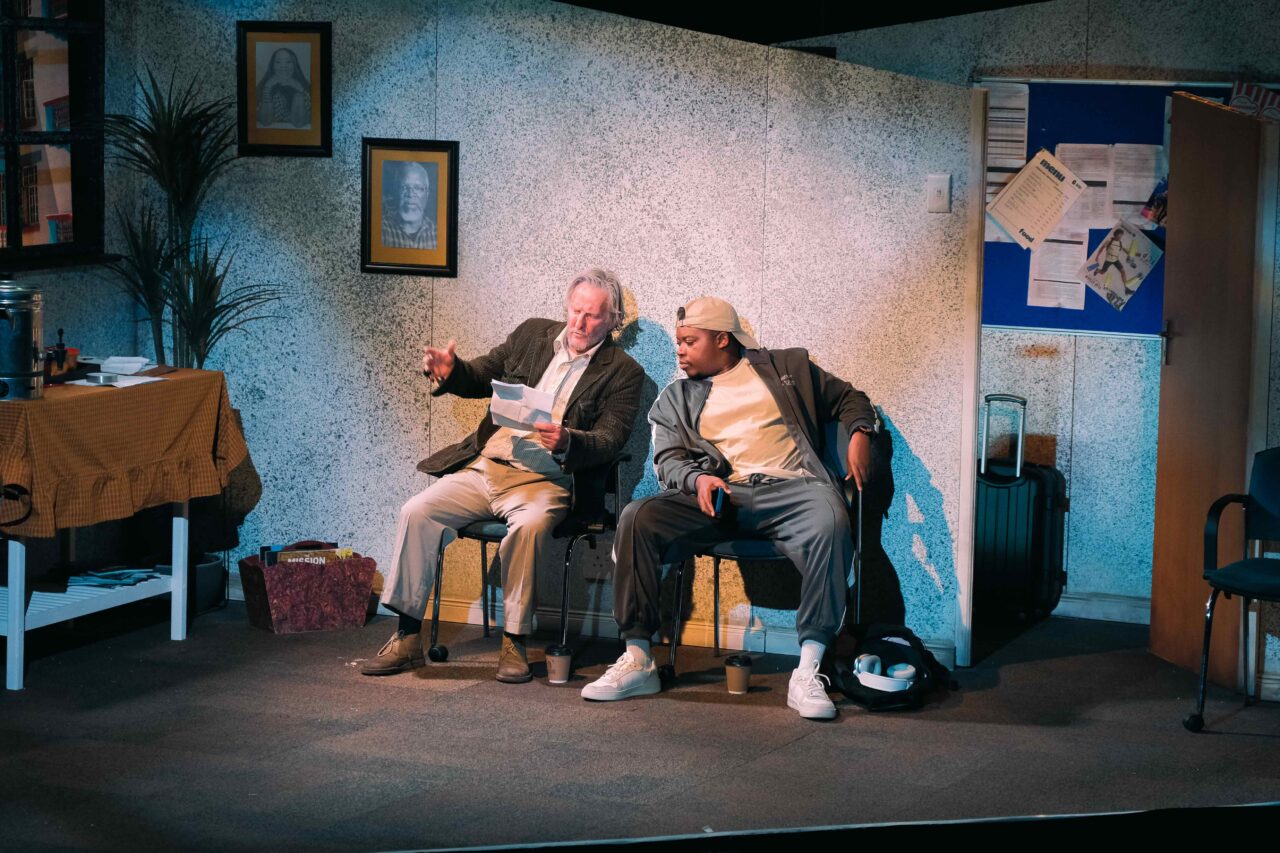
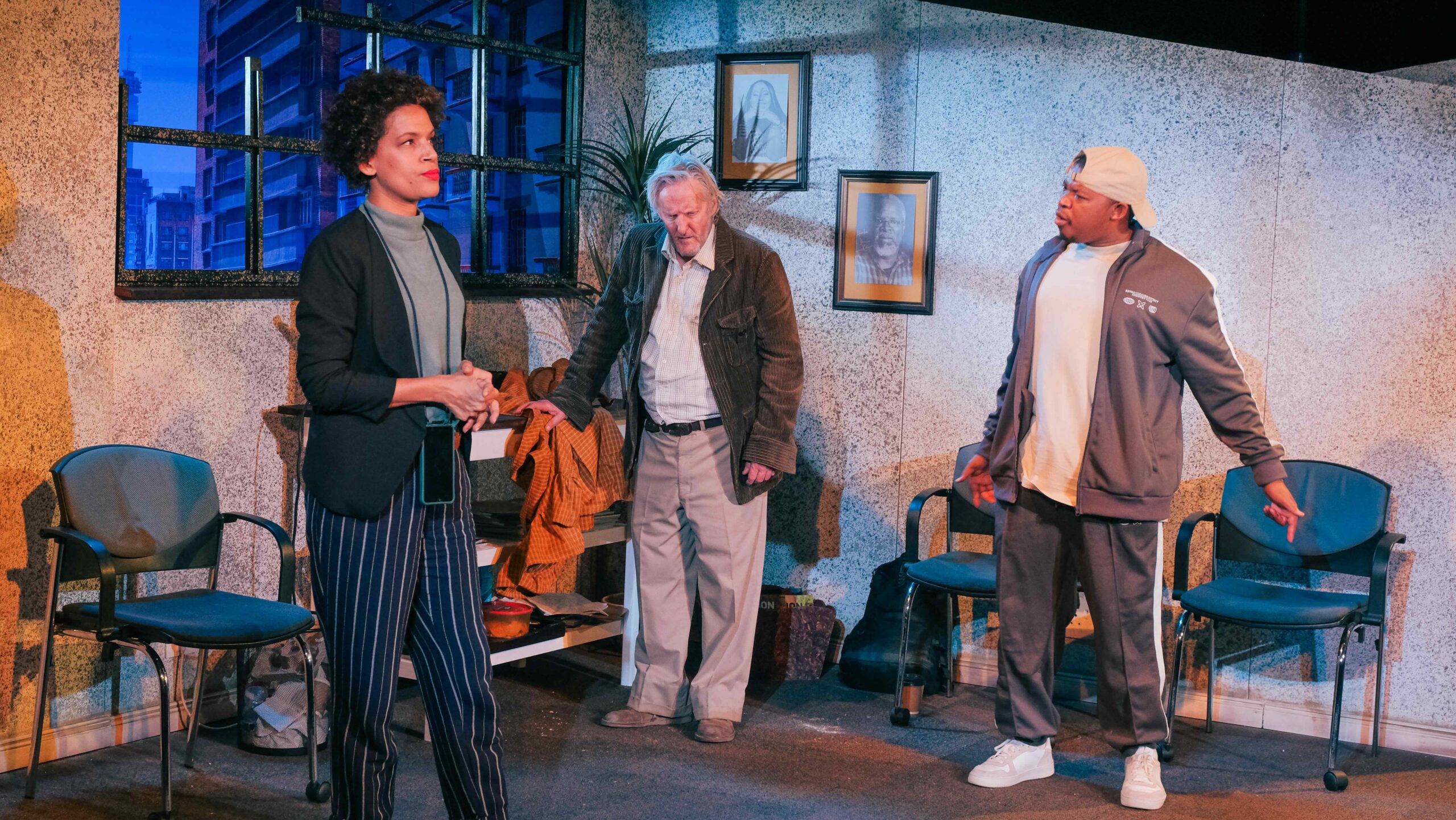
I’m very much a background action kind of person, whether it’s stage or screen. I look beyond what’s happening in front, at things written on signs, views from windows and so on. Therefore I was entranced with the set of this intimate three-hander. Are the balconies on that building built out or very cleverly painted? I noticed as the “outside” lighting changed as the play progressed, and I’m pretty sure I saw a flash or two of late afternoon Joburg lightning. I also marked the framed black and white photographs on the wall: Bill Flynn, John Kani, Leleti Khumalo and Shaleen Surtie-Richards. Each as legendary in South African theatre as the playwright himself. It’s okay, I already told him I’m a huge fan so any gushing is to be expected, and I am unapologetic.
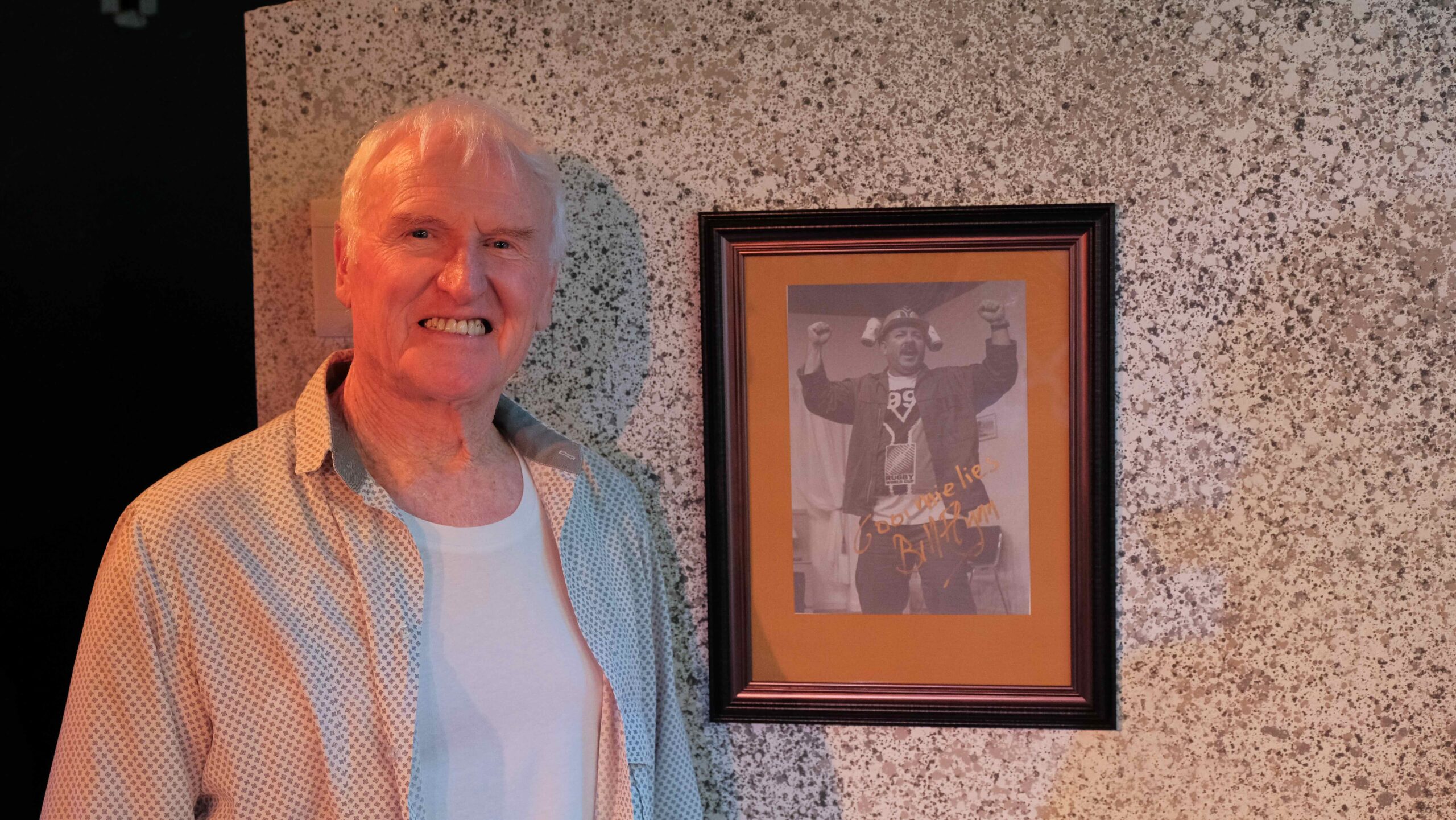
Slabolepszy elaborated. “The one who has great significance to me is Billy Flynn,” he said, with whom he had a long and deep friendship and professional relationship. “The photograph is from our play Heel Against The Head done in 1995. The producer [of Bitter Winter] Weslee [Lauder] chose all the photographs and he knew I’d love a picture of Billy. And I feel Billy’s kind of with us,” he chuckled. “As long as the set is there and Billy is on the stage, he’s with us.”
Being the story of an ageing actor and his desperation, I wondered if the lighting going from bright to dark was a metaphor for that. Slabolepszy said that is an interesting thought, however he had specifically written the play to go from afternoon, to evening, to night, to illustrate the change of mood at the end of the day. “The lighting designer Oliver Hauser has done a great job,” he said.
Bitter Winter was written during the depths of Covid. “When the ‘ban’ started we were at the very beginning of a five-week run at Pieter Toerien’s Montecasino 450-seater theatre in Joburg. The play was Suddenly The Storm. It was very close to my heart and situation at the time,” said Slabolepszy. “I didn’t work for two years. It was hectic. Sold my house, sold my car. That came from a very real place. And I wanted to celebrate the lives of great actors from the past, Billy being one of them, and others I have worked with over the years. A kind of labour of love.”
It is indeed a love letter to theatre, even though the setting is an audition callback for a movie. Performance is performance. But the true art is on the stage, says Jean-Louis Lourens (Andre Odendaal), a classically trained actor whose father disowned him because of his chosen career. Now in his mid-70s, the part of a sheriff in an American Western is not his first choice of role, but perhaps his only choice. Irrespective, he is prepared to put everything he has into it. The play is 80 minutes long but his back story is told in detail, as is that of Prosper Mangane (Oarabile Ditsele), a young up-and-coming screen star. Not a moment, not a line is superfluous. We learn about them as they learn about each other, and their respective judgements. To Prosper, Jean-Louis is a relic from the past; Jean-Louis can’t believe Prosper has little to no knowledge of the theatre and those who paved the road for him until he googles it on his phone.
As the afternoon moves into evening and the the impending and much-delayed arrival of the hot-shot director is promised by casting director, Felicia Willemse (Chantal Stanfield), Jean-Louis and Prosper begin to warm to each other, perhaps grudgingly, but with sincerity. When Jean-Louis first arrives, he makes it clear the room is cold. Prosper eventually gives him his own thermal vest, and thus the warmth is introduced. “Their dialogue takes audiences through the struggles and triumphs of actors who remain deeply committed to their craft despite the challenges they face,” describes the press release.
How it all unfolds is for you to discover yourself, and perhaps you’ll shed a tear or two. You could well guffaw as well, as did the audience on our night. In the beginning, anyway…
“I suppose I’ve trawled my own life, harvested the stories. A lot of the people you hear about in the play, like Cobus Rossouw – I did see him do Richard The Third at the Hofmeyr Theatre in Cape Town in 1969. So that’s real. There are a couple of other real stories too, from my past,” said Slabolepszy. “So it’s dealing with all the problems ageing actors have in South Africa. Doesn’t matter what you’ve done in the past, no one cares. It’s what you can do now. I think my play brings across that message.”
Slabolepszy’s skill in capturing two characters at opposite ends of their careers is magnificent. As he has turned to himself, which one would think is relatively easy, he’s also created Prosper, who couldn’t be more diametrically opposed.
“Well, I work with a lot of young actors with different attitudes and I wanted to find that attitude of a young black man who’d had a terrible time as a kid,” he said. “And also I go back to how I felt as a youngster. Like Billy…he bought an Alfa when he couldn’t really afford it. That’s what young actors do. They spend all their money on parties, motor cars, things like that, and not saving up for a rainy day.”
Anyone who loves theatre must see Bitter Winter. Performances are Tuesdays to Fridays at 8pm and Saturdays at 3pm and 8pm. Tickets range from R180 – R220 and bookings are via Webtickets and selected Pick ‘n Pay stores. Discounts for senior citizens and students apply.
The show is 80 minutes in duration with no interval and has a suggested age restriction of PG10. Patrons are advised that the language mix in the show is be approximately 70% English, 20% Afrikaans and 10% Sotho. Read more here.
